Recollection Ruins
Built at the end of the 18th century, the architectural complex served as a base for cloisters, cells, infirmaries, classrooms, libraries and a church. It was administered by Recollect friars who resumed the activities of the complex in the Ermita Valley after the Santa Marta earthquakes. After the mobilization, the building was abandoned. It later became the site of a soap factory and a sports complex.

Horario
Monday to Sunday: 9 - 17 h
Hours
Monday to sunday: 9 – 17 h
Pago por ingreso
Q.5 (guatemaltecos), Q.50 (extranjeros) y gratis para estudiantes con carnet
Admission fee
Q.5 (guatemalans), Q.50 (foreigners) and free entry for students with ID
Built in the late 18th century, the architectural complex served as a base for cloisters, cells, infirmaries, classrooms, libraries, and a church. It was managed by Recollect friars, who resumed the complex's activities in the Valle de la Ermita following the earthquakes in Santa Marta. After the relocation, the property was abandoned. Later, it became the site of a soap factory and a sports complex.
About the artists at the venue
At the majestic ruins of La Recolección, the site-specific installations from Igor Grubić y Kite explore resilience, cultural migration and spiritual interconnectedness.
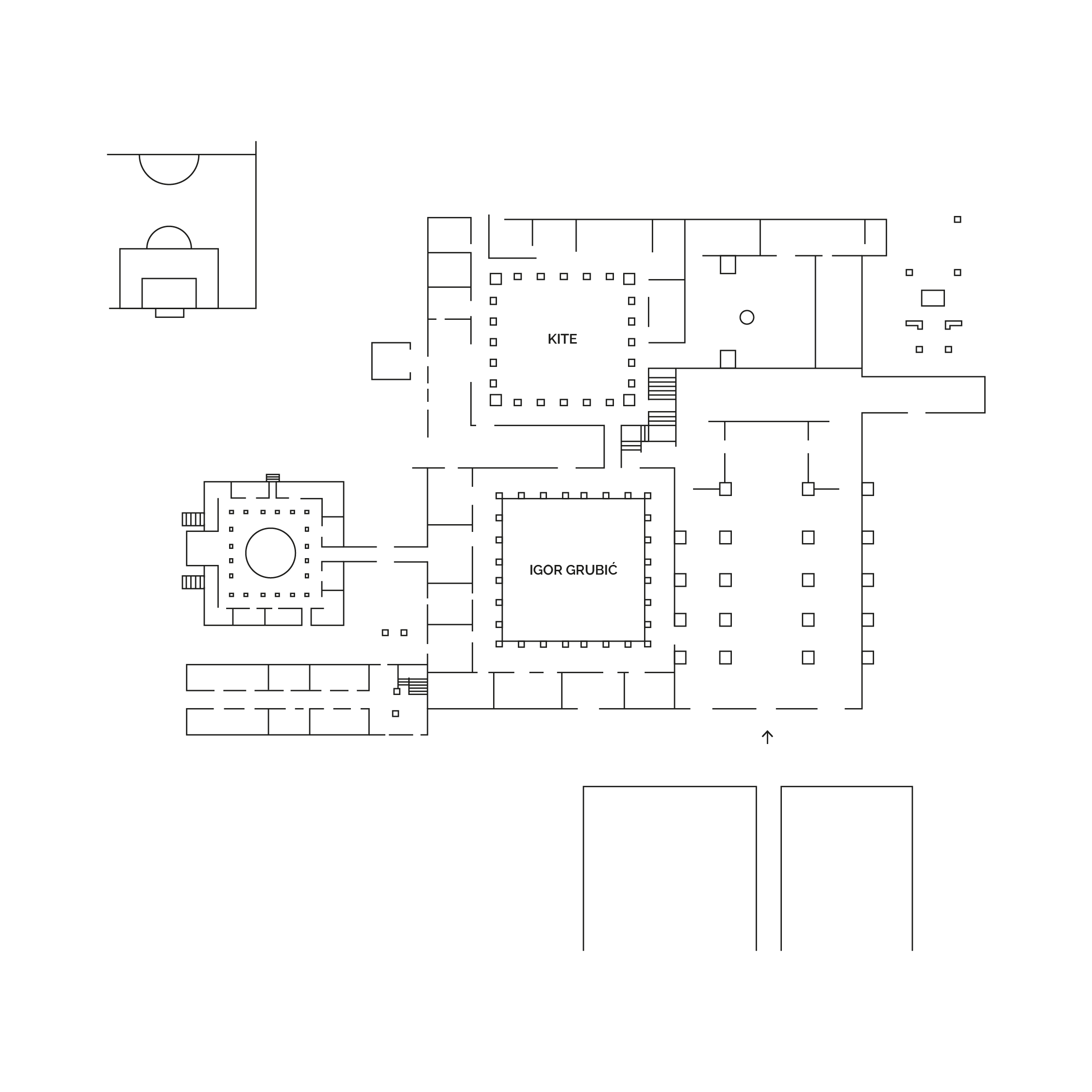
Igor Grubić, in the main cloister, reimagines ‘The World Tree’ as a metaphor for survival and rebirth. He positions the planting as a radical act of recovery in a fractured world, aligning with the Biennial's theme by framing ‘The World Tree’ as a call to cultivate empathy, resilience, and transformation.
Kite transforms interviews with local experimental musicians into a graphic score inspired by the geometries of the indigenous Lakota people, drawing on their dreams to chart a shared vision of territory, memory and spirituality.
Through Kite and Grubić's interventions, we are invited to imagine a world where the seeds of creativity, culture and connection germinate, ultimately contributing to a harmonious existence within the vast ecosystem represented by ‘The World Tree’.
About the artists at this venue
At the majestic ruins of La Recolección, the site-specific installations of Igor Grubić and Kite explore resilience, cultural migration, and spiritual interconnectedness.
Igor Grubić, in the main cloister, reimagines ‘The World Tree’ as a metaphor for survival and rebirth. He positions planting as a radical act of reclamation in a fractured world, aligning with the Biennale's theme by framing ‘The World Tree’ as a call to cultivate empathy, resilience, and transformation.
Kite transforms interviews with local experimental musicians into a graphic score inspired by the geometries of the Lakota indigenous people, drawing on their dreams to trace a shared vision of territory, memory, and spirituality.
Through Kite and Grubić's interventions, we are encouraged to envision a world where the seeds of creativity, culture, and connection flourish, ultimately contributing to a harmonious existence within the vast ecosystem that ‘The World Tree’ represents.
Mapa de la sede