Spanish Cooperation Training Center (CFCE)
Inaugurated as a cultural and learning space in 1996, it is located within the old facilities of the Colegio de la Compañía de Jesús, founded in 1582 in Santiago de los Caballeros. The space included a temple and three cloisters. In 1979 it was included in the inscription of Antigua Guatemala as a World Heritage Site. It currently has spaces for exhibitions, as well as courtyards and a documentation center.

Horario
Monday to Sunday: 9 - 18 h
Hours
Monday to sunday: 9 – 18 h
Housed in the former buildings of the School of the Society of Jesus, founded in Santiago de los Caballeros in 1582, it was established as a cultural and educational center in 1996. The space encompassed a temple and three cloisters. In 1979 it was included in the inscription of Antigua Guatemala as a World Heritage Site. It currently offers exhibition spaces, courtyards, and a documentation center.
About the artists at the venue
At the CFCE, ‘The World Tree’ connects with diverse planes of existence, bridging different eras and experiences - archaeological and contemporary, collective and individual, ephemeral and eternal, real and imagined, rupture and renewal - creating a dynamic dialogue across time and cultures.
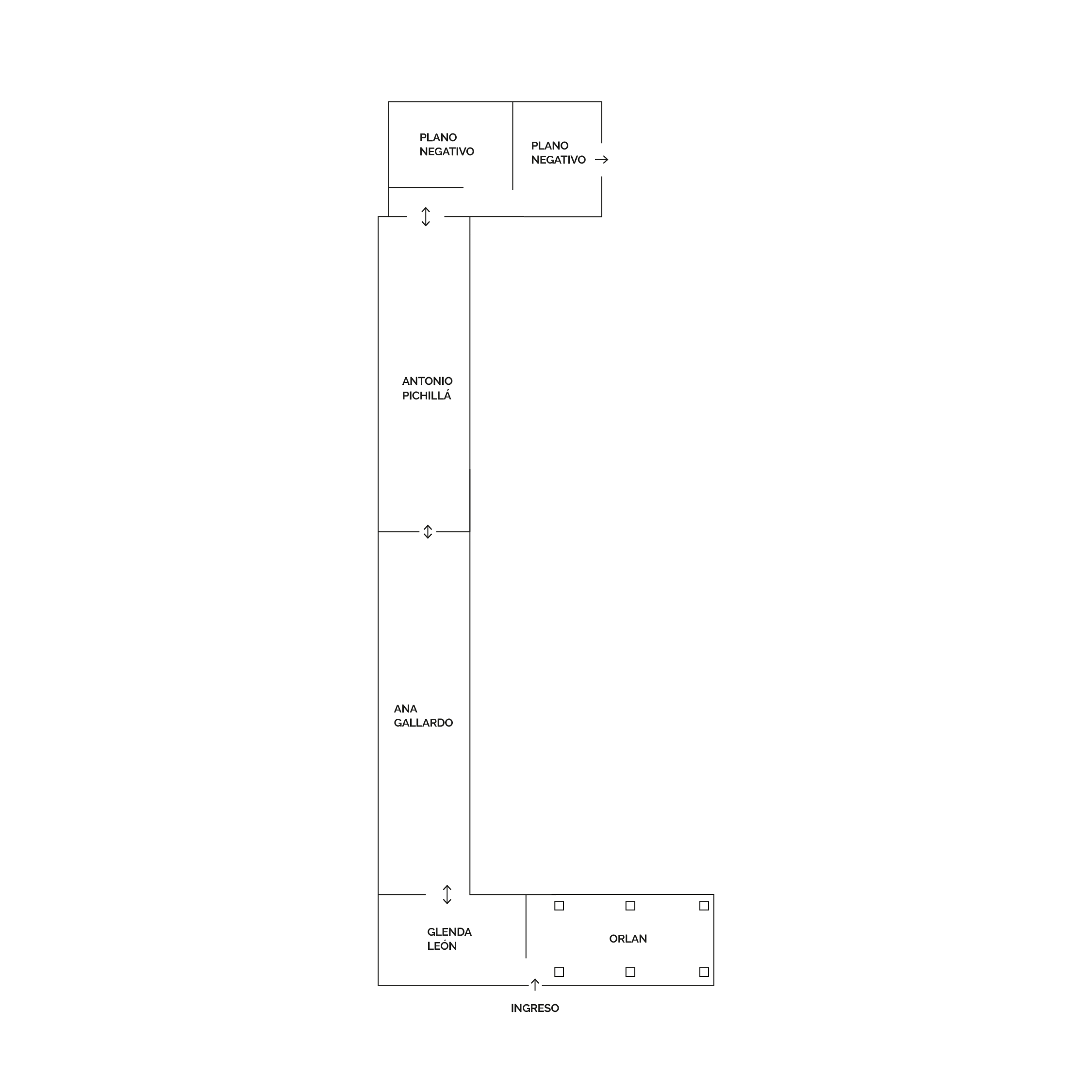
The work of ORLAN offers a metahistorical short-circuit between past and present, presented in dialogue with pieces of pre-Hispanic Mayan art. Together, they pay homage to the cyclical nature of time in Mayan cosmology and enrich the concept of ‘The World Tree’ as a project that transcends epochs.
Humanity's spiritual blindness, the root cause of numerous historical conflicts, is at the heart of the installation of Glenda Leon, The project proposes a listening experience where the invisible, the sacred and the universal are intertwined.
Ana Gallardo in collaboration with María Us, explores an intimate landscape that intertwines language, territory, memory and resistance. These same concerns are shared by Antonio Pichillá, who incorporates Maya-Tz'utujil beliefs and spirituality into his practice as a way of preserving identity and heritage.
The urgencies caused by environmental and social violence are at the heart of the proposal of Negative Plane, which invites us to reflect on how human practices have turned the environment into a weapon.
A disturbing universe where suspended and empty time evokes ghostly presences of a past devastated by war characterizes the work of Ali Cherri, which stands as a metaphor for the dissolution of certainties, around the very notion of borders.
Through ‘The World Tree’, the artists at CFCE intertwine ancestral wisdom with contemporary concerns. Their works, together, urge us to confront our past and present, fostering a vision of a more conscious, equitable and sustainable future.
About the artists at this venue
At The CFCE, ‘The World Tree’ connects diverse domains of existence, bridging different eras and experiences- archeological and contemporary, collective and individual, ephemeral and eternal, real and imagined, disruption and renewal-creating a dynamic dialogue across time and cultures.
A meta-historical short-circuit between past and present is offered by ORLAN's work, displayed in dialogue with pre-Hispanic Maya art pieces. Together, they pay homage to the cyclical nature of time in Maya cosmology and enhance the concept of ‘The World Tree’ as a project that transcends epochs.
Humanity's spiritual blindness, a root cause of historical conflicts, is at the core of Glenda Leon‘s installation, which proposes a listening experience where the invisible, the sacred, and the universal intertwine.
Ana Gallardo, in collaboration with María Us, explores an intimate landscape that entangles language, territory, memory, and resistance. The same concerns are shared by Antonio Pichillá, who incorporates Maya-Tz'utujil beliefs and spirituality into his practice as a means of preserving identity and heritage.
The pressing issues of environmental and social violence are at the core of Negative Plane‘s proposal, which prompts us to reflect on how human practices have weaponized our environment.
A haunting universe where suspended, empty time conjures ghostly presences from a war-torn past marks Ali Cherri’s work, which stands as a metaphor for the dissolution of certainties, surrounding the very notion of borders.
Through ‘The World Tree,’ the artists at the CFCE bridge ancestral wisdom with contemporary concerns. Their works collectively urge us to confront our past and present, fostering a vision for a more conscious, equitable, and sustainable future.
Mapa de la sede