National Museum of Art of Guatemala (MUNAG)
It is located in the former Royal Palace of the Captains General, built in the 16th century. In 1979, the building was declared Cultural Patrimony of Humanity. It was inaugurated as a museum in 2021 by the Government of Guatemala. Since then, it is a unique museum space where national art is promoted, including archaeological pieces from the pre-Hispanic era, objects from the period of Independence and the Republic. The collection includes works of sacred, modern and contemporary art.

Horario
Tuesday to Sunday: 10 - 18 h
Hours
Tuesday to sunday: 10 – 18 h
It is located in the former Real Palacio de los Capitanes Generales, built in the 16th century. In 1979, the building was declared a World Cultural Heritage Site. It was inaugurated as a museum in 2021 by the Government of Guatemala. Since then, it has been a unique museum space that promotes national art, showcasing archaeological pieces from the pre-Hispanic era, as well as objects from the Independence and Republic periods. The collection includes sacred, modern, and contemporary works of art.
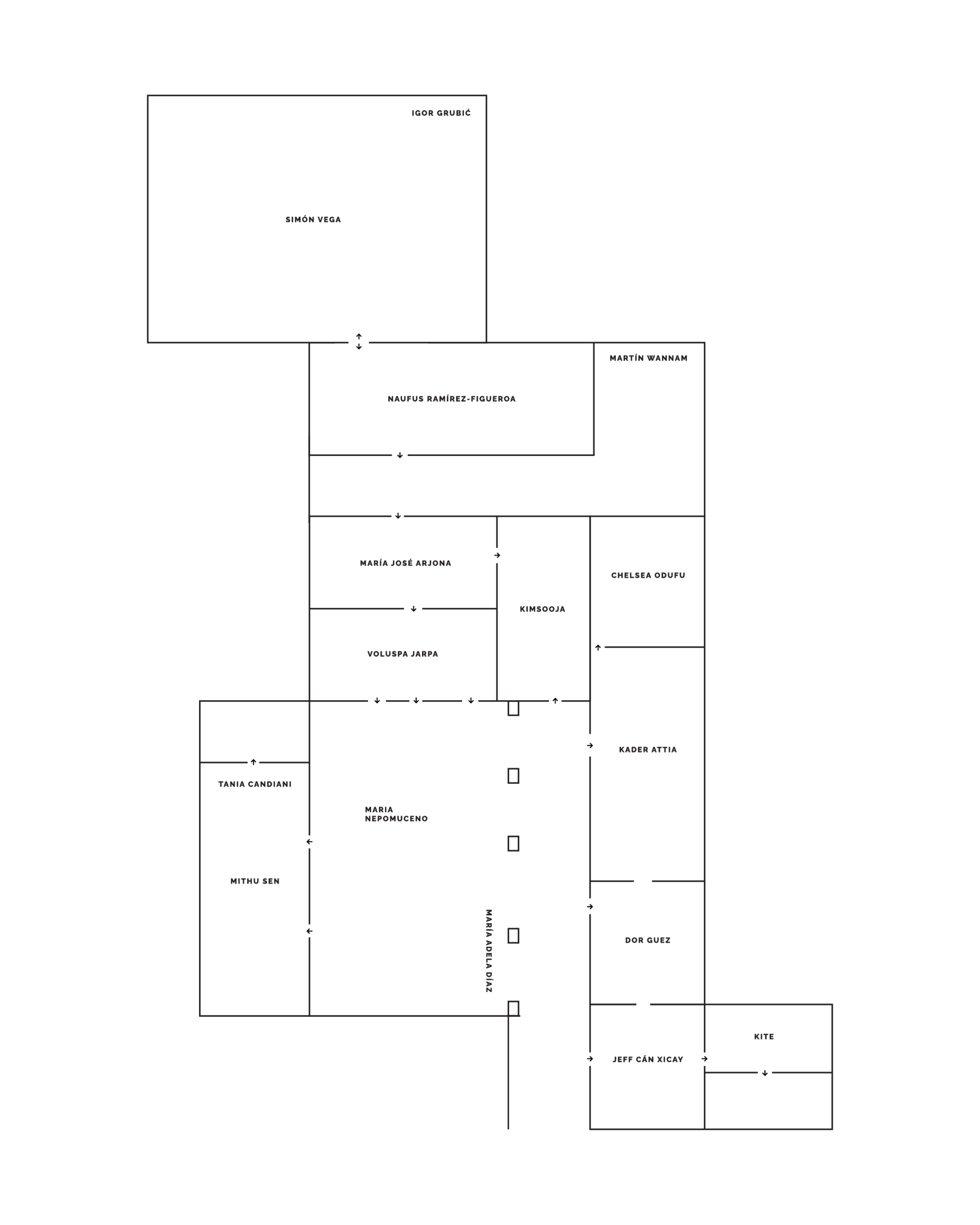
About the artists at the venue
At MUNAG, ‘The World Tree’ brings together artists who weave narratives around social paradoxes, conflicts, ecological crises and an intense exploration of identity. This powerful symbol invites the viewer to confront urgent global issues with a sense of collective responsibility and a transformative vision.
Kite y Jeff Cán Xicay merge personal and collective memories with innovative forms of storytelling, creating alternative modes of listening and co-creation that intertwine ancestral knowledge, language, spirituality and traditions.
For its part, Kader Attia, Voluspa Jarpa y Dor Guez address various forms of conflict, questioning the role of contemporary art in the narration of silenced histories and the recontextualization of visual and written archives.
Tania Candiani y Chelsea Odufu reimagine the symbolic vastness of the tree, interweaving ancient narratives with sharp ecological and political critiques. At the same time, María José Arjona raises water as a profound philosophical and affective force.
The alarming presence of contamination in Lake Amatilán is motivating Maria Adela Diaz to assume a poetic and political stance, inviting the community to reflect on the relationship between human beings and nature.
Mithu Sen e Igor Grubić dismantle entrenched social hierarchies, betting on a transformational activism, while Kimsooja y Maria Nepomuceno imagine a unified society that celebrates shared humanity.
Naufus Ramirez-Figueroa y Simon Vega, From an archeological point of view, they investigate the past to question the present, fluidly intertwining collective history with intimate stories.
Recontextualization queer that Martin Wannam makes of this sacred Mayan and Guatemalan national symbol reimagines ‘The World Tree’ as a radiant emblem of inclusion and cultural recovery.
Conceived and designed to resonate with the historical and architectural essence of the space, this section of the Biennial affirms that social challenges are deeply interconnected, fueling a more equitable worldview that demands collective action and proactive solutions.
About the artists at this venue
At MUNAG, ‘The World Tree’ brings together artists who weave narratives of societal paradoxes, conflicts, ecological crises, the pursuit of justice and an intensive exploration of identity. This powerful symbol compels viewers to confront pressing global issues with a sense of collective responsibility and a transformative vision.
Kite and Jeff Cán Xicay fuse personal and collective memories with innovative storytelling, crafting alternative modes of listening and co-creation that entwine ancestral knowledge, language, spirituality, and traditions.
Meanwhile, Kader Attia, Voluspa Jarpa, and Dor Guez tackle various forms of conflict, questioning the role of contemporary art in narrating suppressed stories and recontextualizing visual and written archives.
Tania Candiani and Chelsea Odufu reimagine the tree's vast symbolism, intertwining ancient accounts with sharp ecological and political critiques. At the same time, María José Arjona elevates water as a profound philosophical and affective force.
The alarming presence of pollution in Lake Amatitlán prompts Maria Adela Diaz to take a poetic and political stance, inviting the community to reflect on the relationship between humans and nature.
Mithu Sen and Igor Grubic dismantle entrenched social hierarchies, championing transformative activism, as Kimsooja and Maria Nepomuceno envisioning a unified society celebrating shared humanity.
Naufus Ramírez-Figueroa and Simon Vega, through an archaeological lens, probe the past to interrogate the present, seamlessly blending collective history with personal narratives.
Martin Wannam’s queer recontextualization of this sacred Mayan and Guatemalan national symbol, reimagines ‘The World Tree’ as a radiant emblem of inclusivity and cultural reclamation.
Conceived and designed to resonate with the space's historical and architectural essence, this section of the Biennale asserts that societal challenges are interconnected, fuelling a vision for a more equitable world that calls for collective action and proactive solutions.
Mapa de la sede